Design > User flows
User flows
User Journey Mapping
Mapping the user’s journey or flow through a system or task is essential to understanding their current experience and any problems they might be facing. If possible, it’s good to do this with the users themselves, to ensure we have a valid and accurate flow. Once you have the core journey, you can highlight where the users pain points are and start to think about how improvements could be made.
This has been an essential part of all of my roles, but particulary at HCL where I was able to run journey mapping exercises directly with user groups.
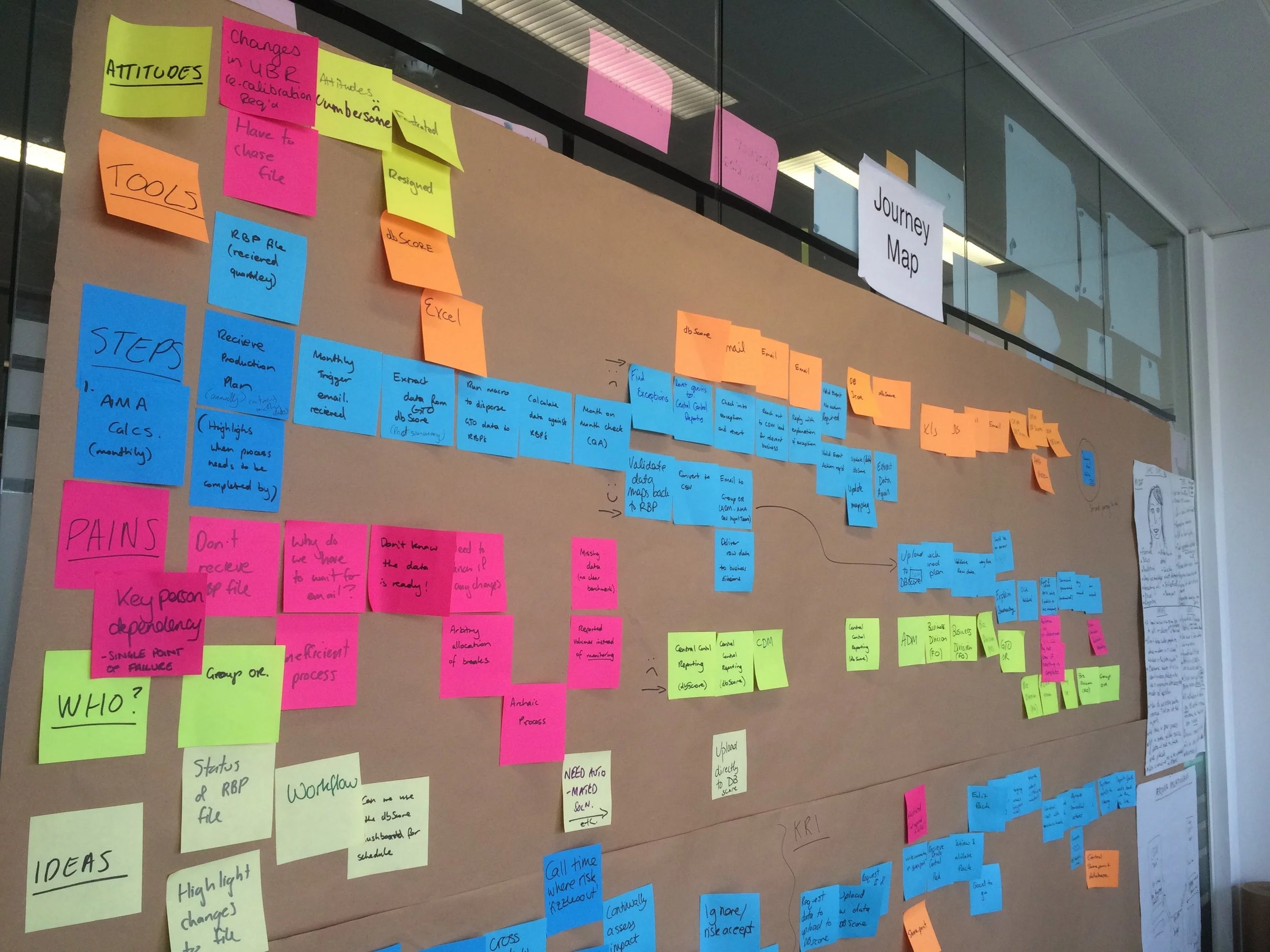
Example output from a user journey mapping exercise with Deutsche bank staff
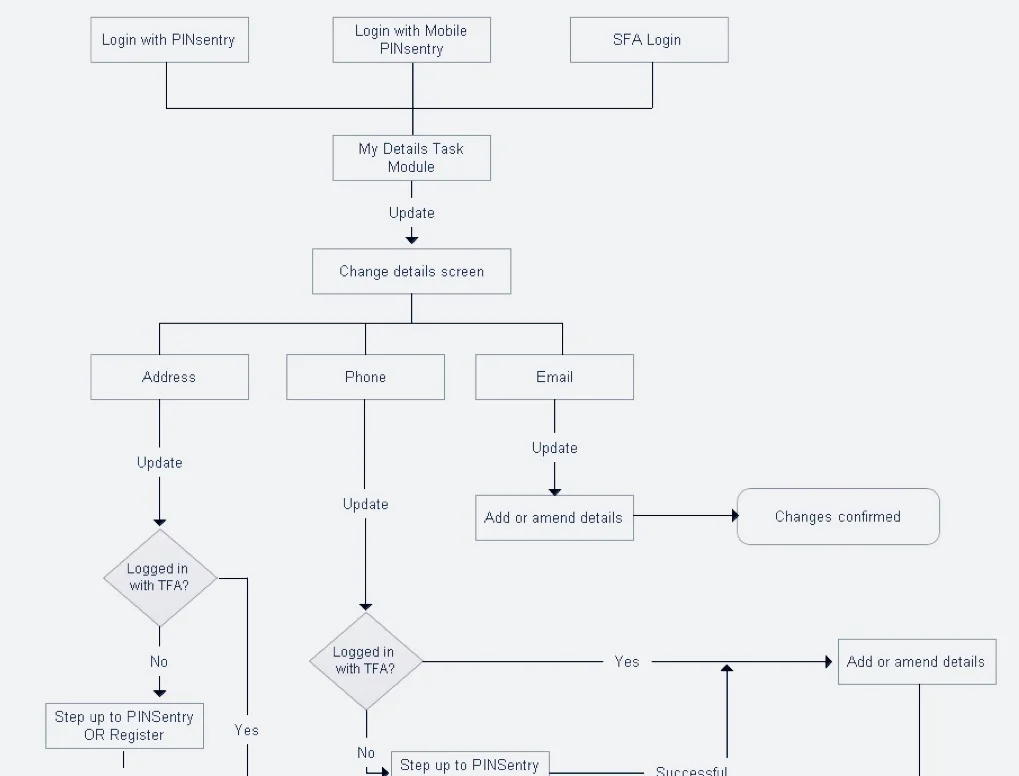
A formalised user flow taken from a Barclays online banking design
Service desigN
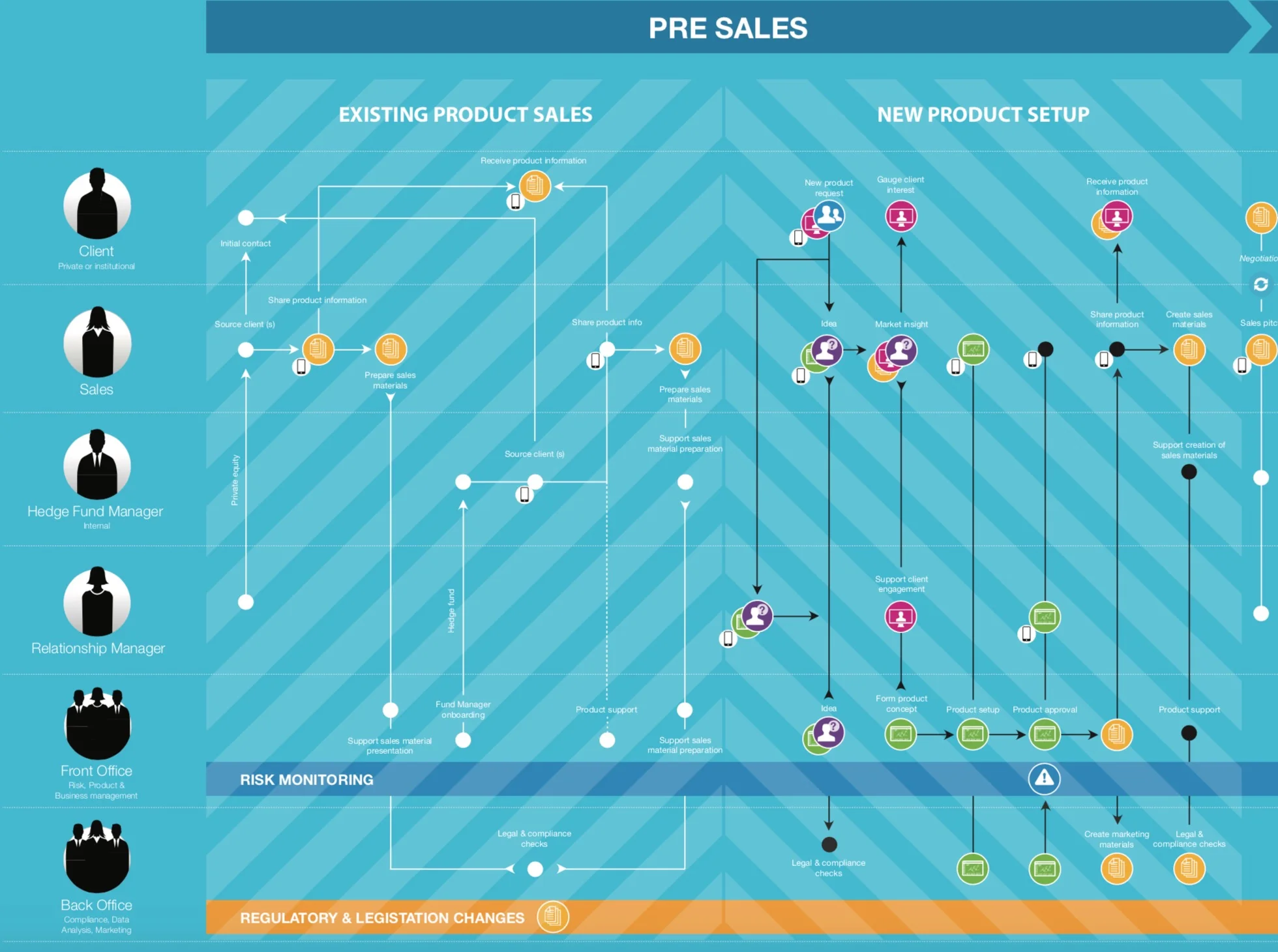
Service design allows you to take journey mapping to another level. You can map what different types of users are doing, when, and what channels or technologies they are using across an entire system or ‘service’.
This is a map I created for a Wealth Management project with Deutsche Bank. I transformed a user insight report, which explored the user experience within the entire service, into a visualisation showing the journeys taken by different user groups along with the technologies used and product cycles. I then overlaid the user pain points identified in the research, allowing the client to see and understand where their process was broken.
From here, I created a future-state map (as shown) to demonstrate how we could streamline the experience and implement new technologies to help.
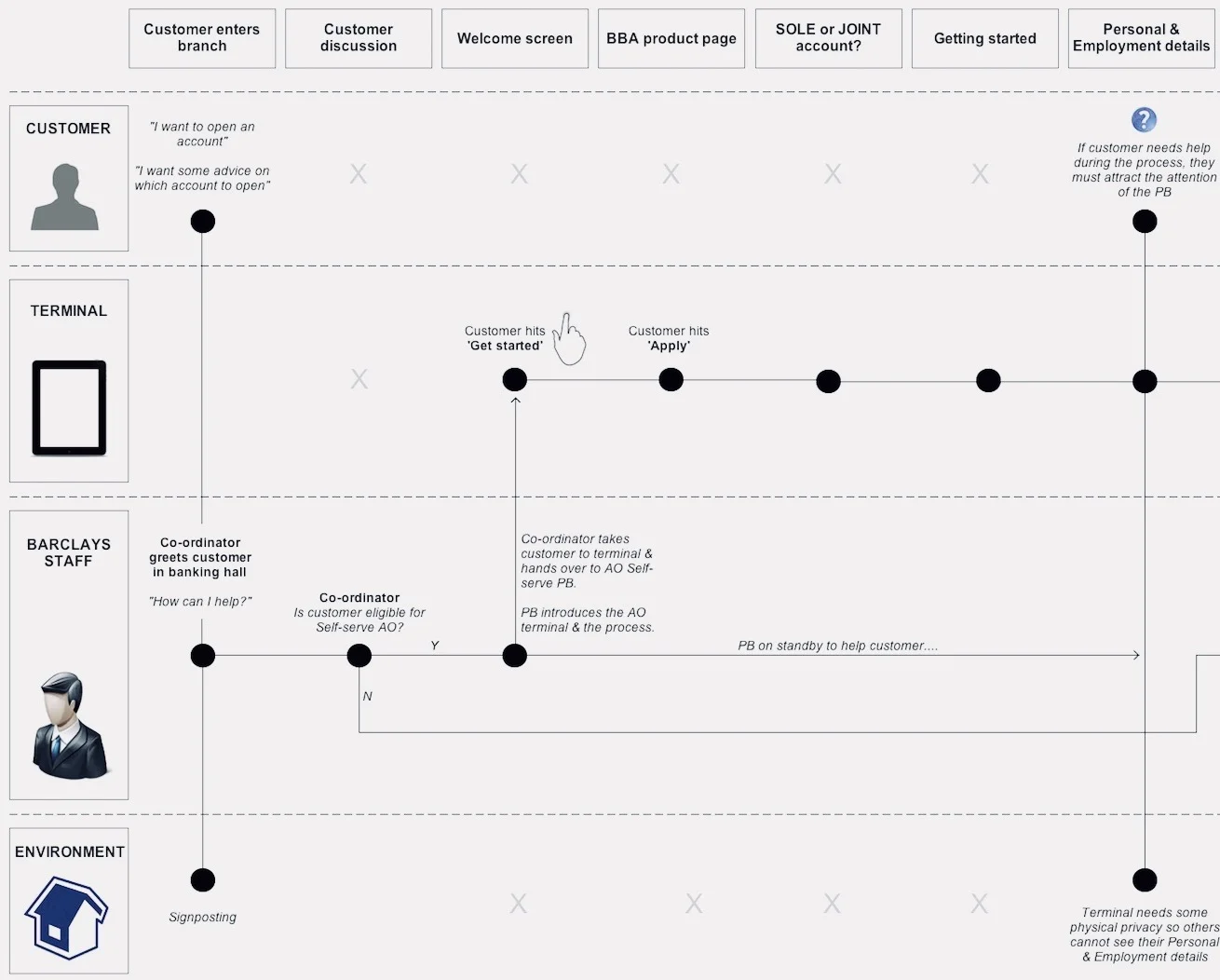
Snippet from a service design map created for Barclays UK
Here's example of a service design map I created for Barclays UK. This was a discovery project to investigate 'self-serve' banking behaviours in-branch.
This was an interesting project as it involved thinking about a user's experience in the physical environment, as well as the people and technology interactions.