< Back to Service design
Case Study - Cambridge University (CEM)

Aim
CEM (Cambridge’s Centre for Evaluation & Monitoring) are an organisation who design assessments and tools to manage performance monitoring data for educational institutions.
CEM’s systems and products were out-dated and they were starting to lose customers to competitors. They needed to upgrade their software and approach to customer experience. The service strategy was to explore the end-to-end customer life cycle to better understand where the opportunities may lie.
Method
Held exploratory workshops with stakeholders to explore the problem space, scope the project and manage expectations. Conducted contextual background research including: product walkthroughs, analysing call centre data, customer feedback surveys, user and systems landscapes, and organisational setup.
Planned, scoped and managed several rounds of user research with both internal stakeholders and customers, in the form of interviews and workshops. The service design project was delivered in 2-week sprints, as the team were working in Agile delivery it was felt this would bring regular and tangible updates for them.
Created a prototype of prioritised opportunities and tested with customers. This insight helped inform the future-state service blueprint.
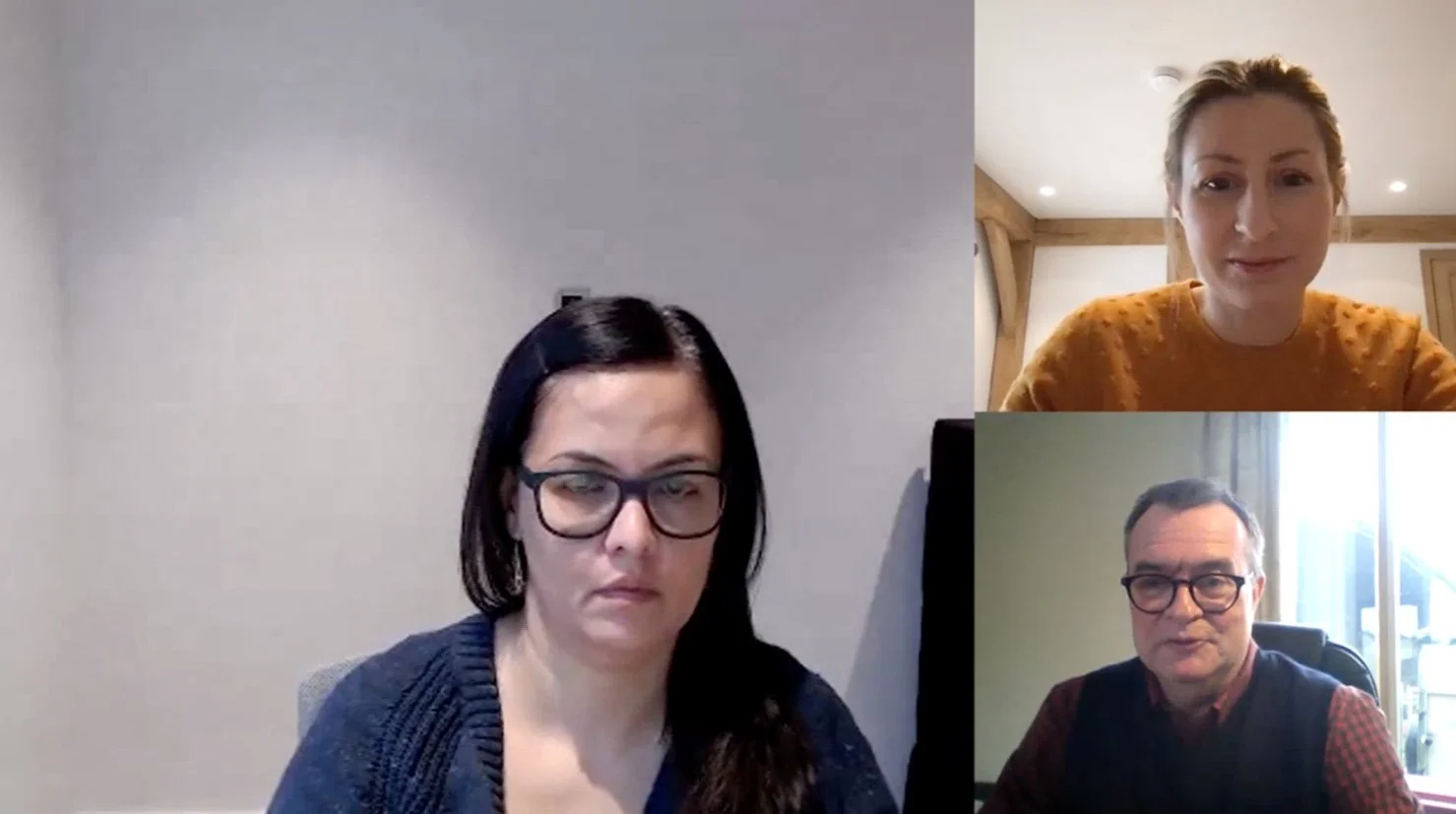
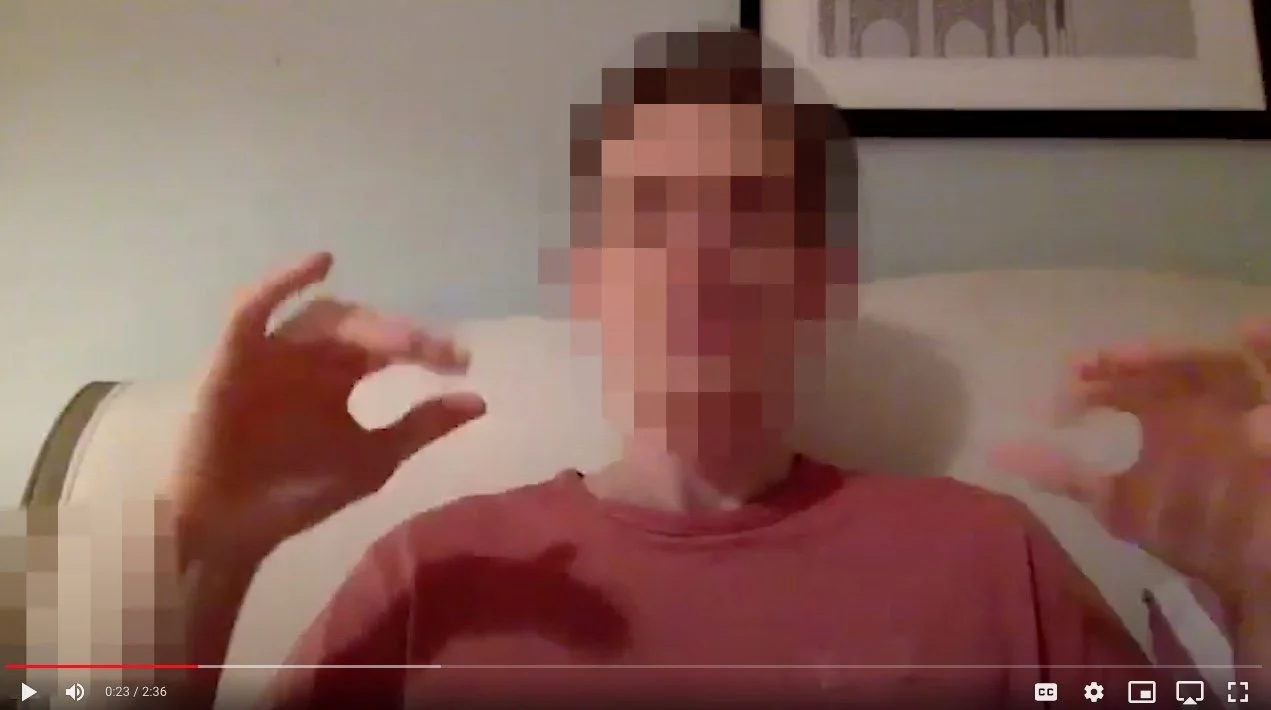
Remote customer interview
outcomes
The personas and customer pain points helped bring focus and empathy back to the customer, whilst identified opportunities helped the team create a roadmap based on prioritised features.
PROJECT artefacts
Please note - some images have been obscured due to the project NDA.
Planning
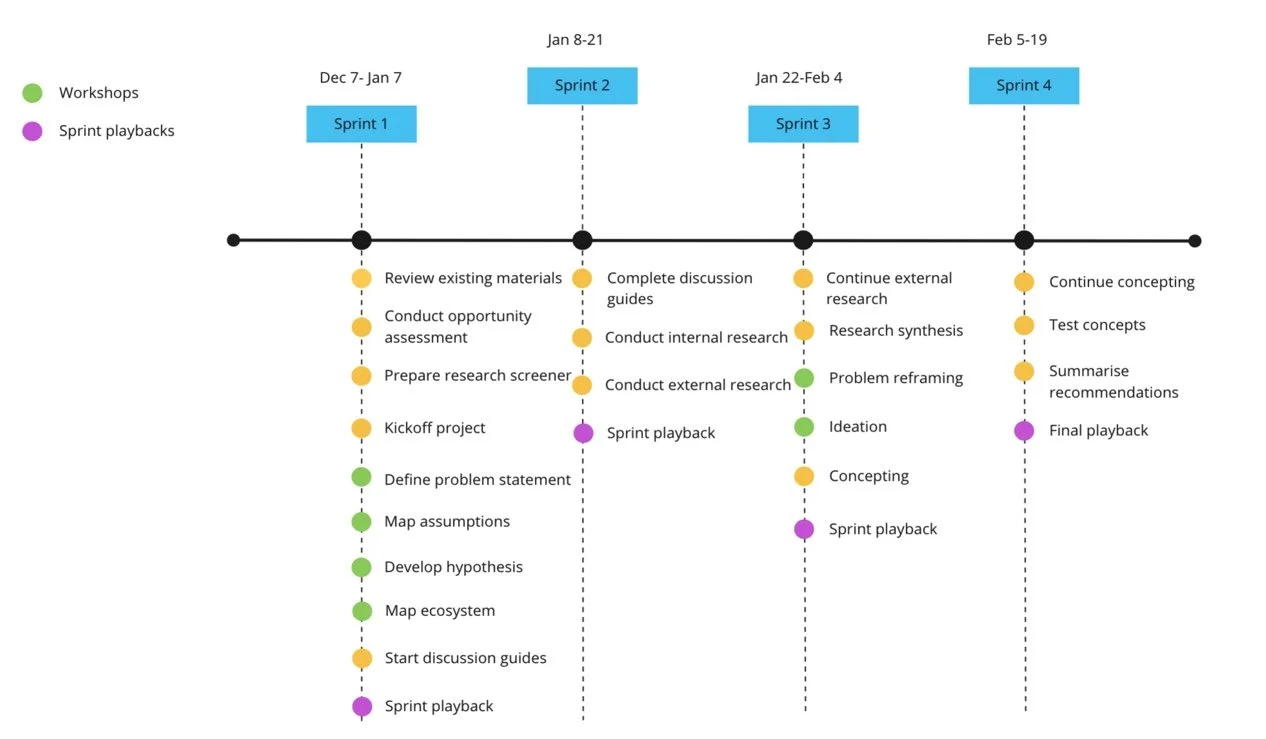
Workshop artefacts
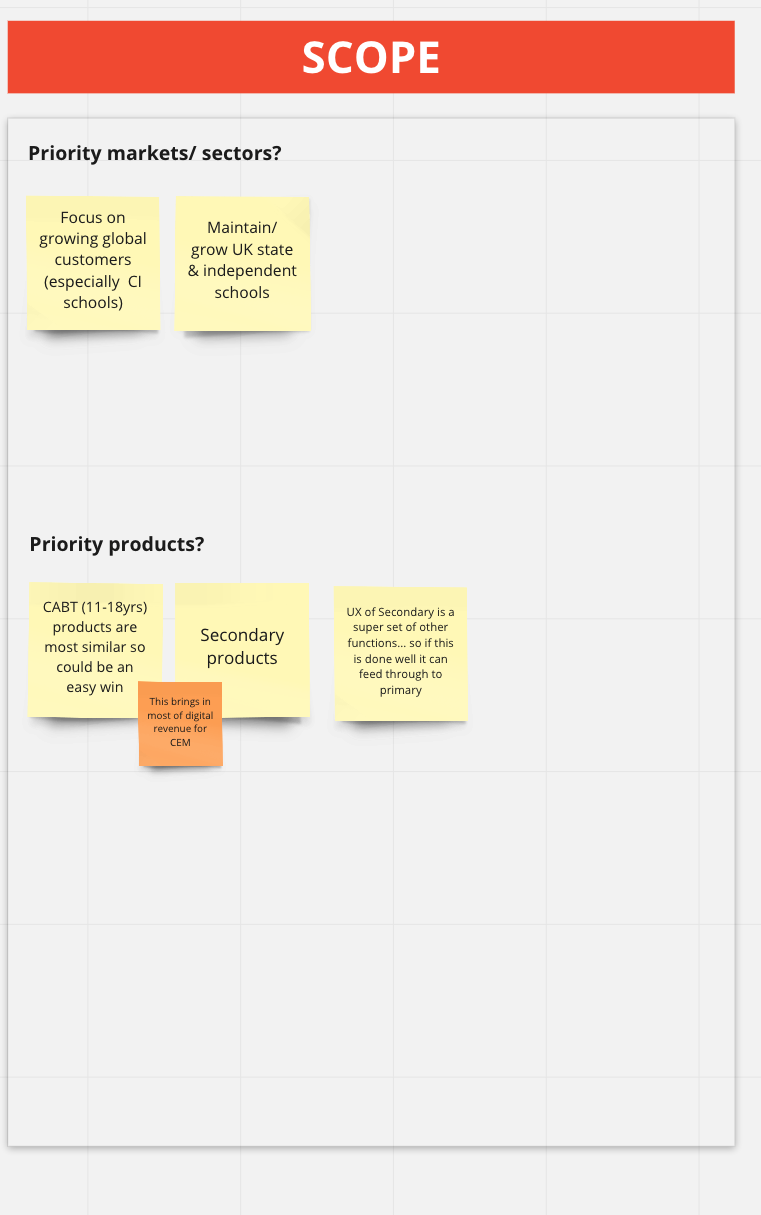
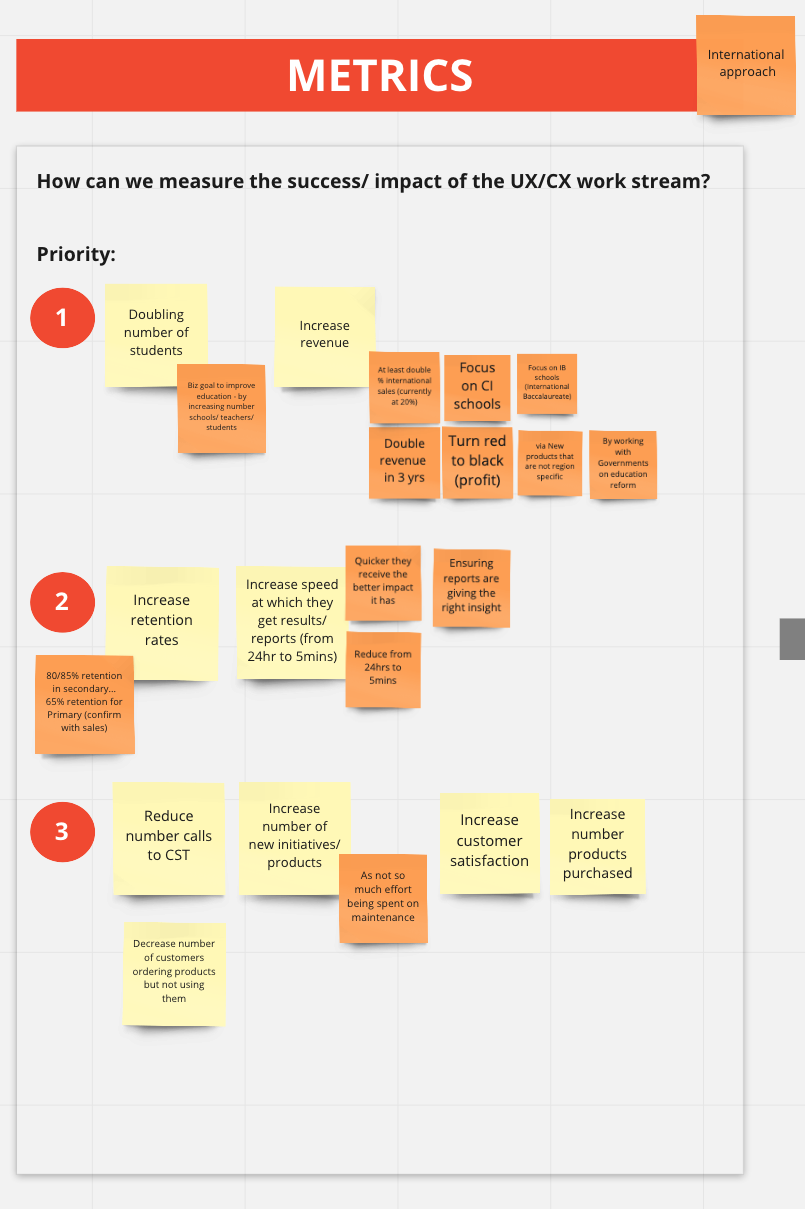
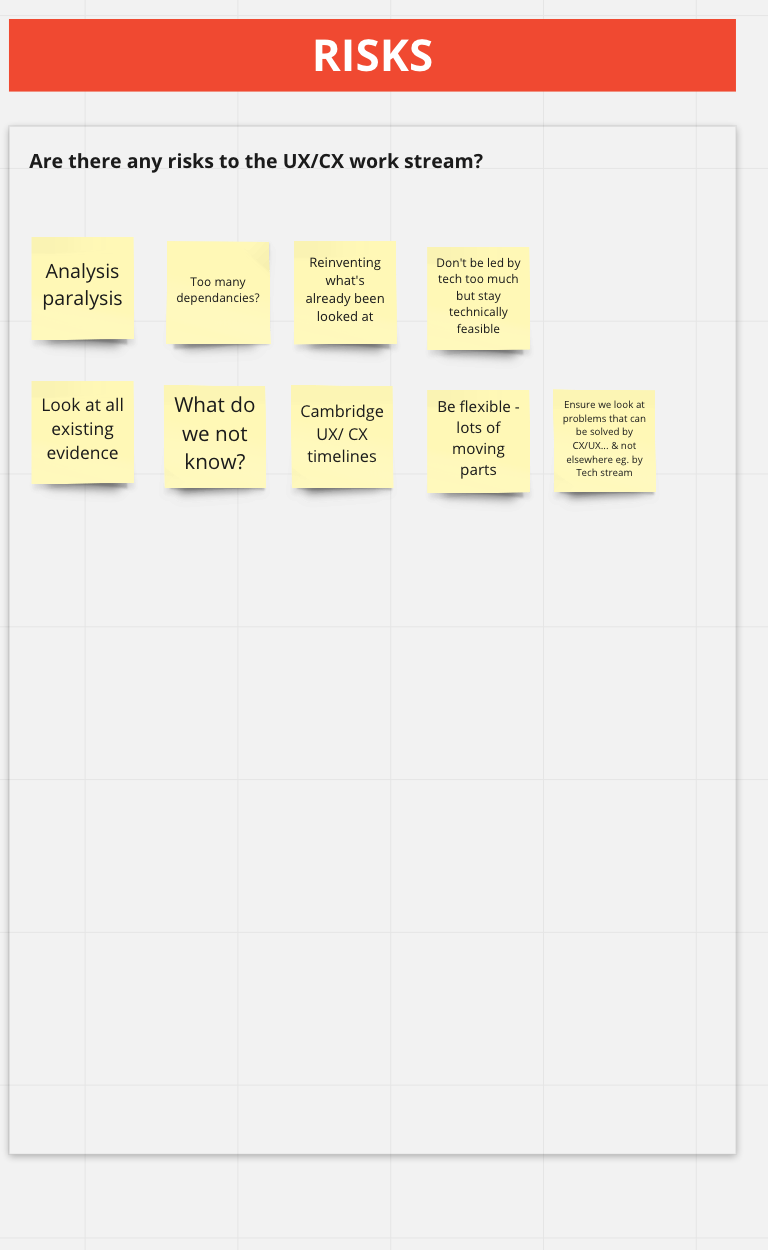
Held workshops with stakeholders to 1) Explore and scope out the problem space, 2) Create a problem definition statement, 3) Explore current assumptions and agree research hypotheses:
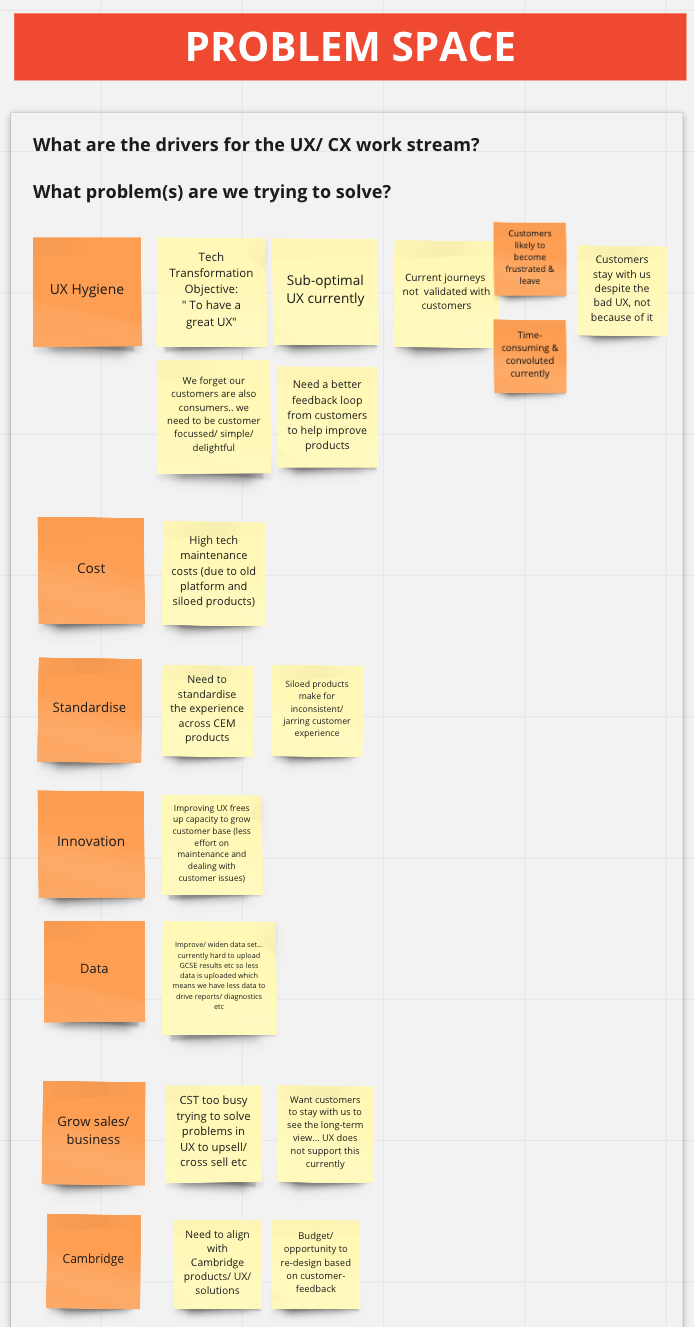
Artefacts from problem space workshop
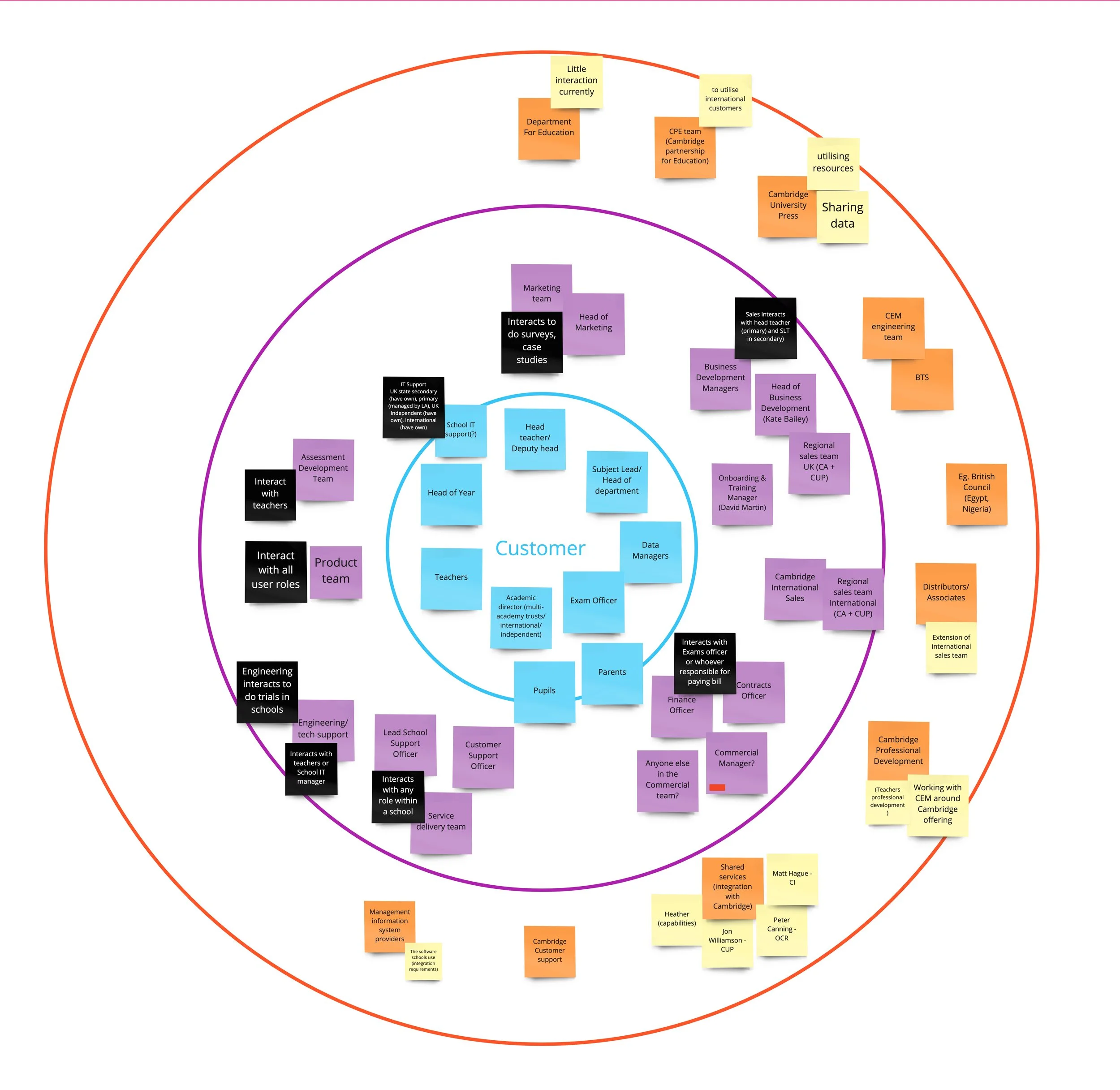
Ecosystem map created with stakeholders
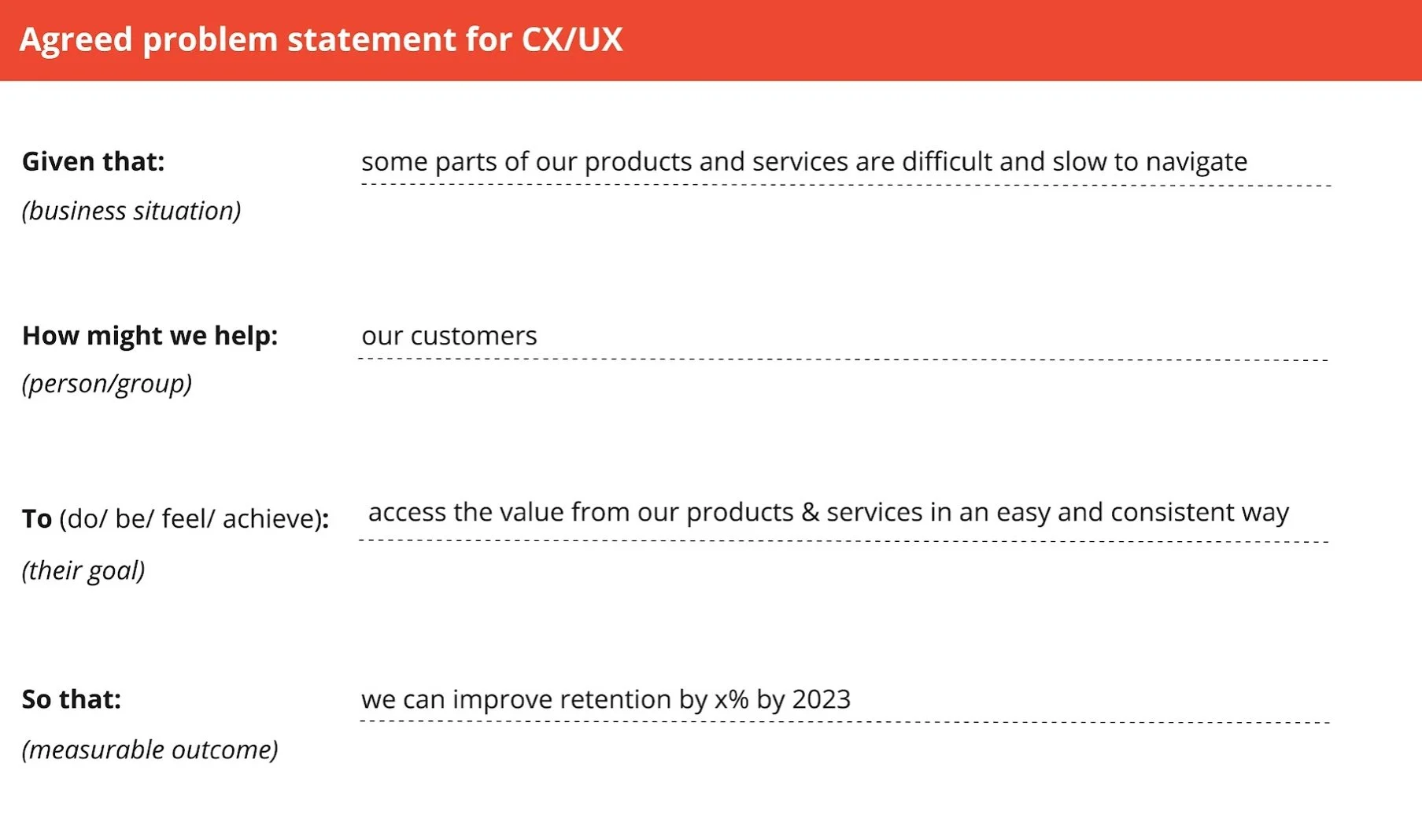
Problem statement created with stakeholders during Problem Definition workshop
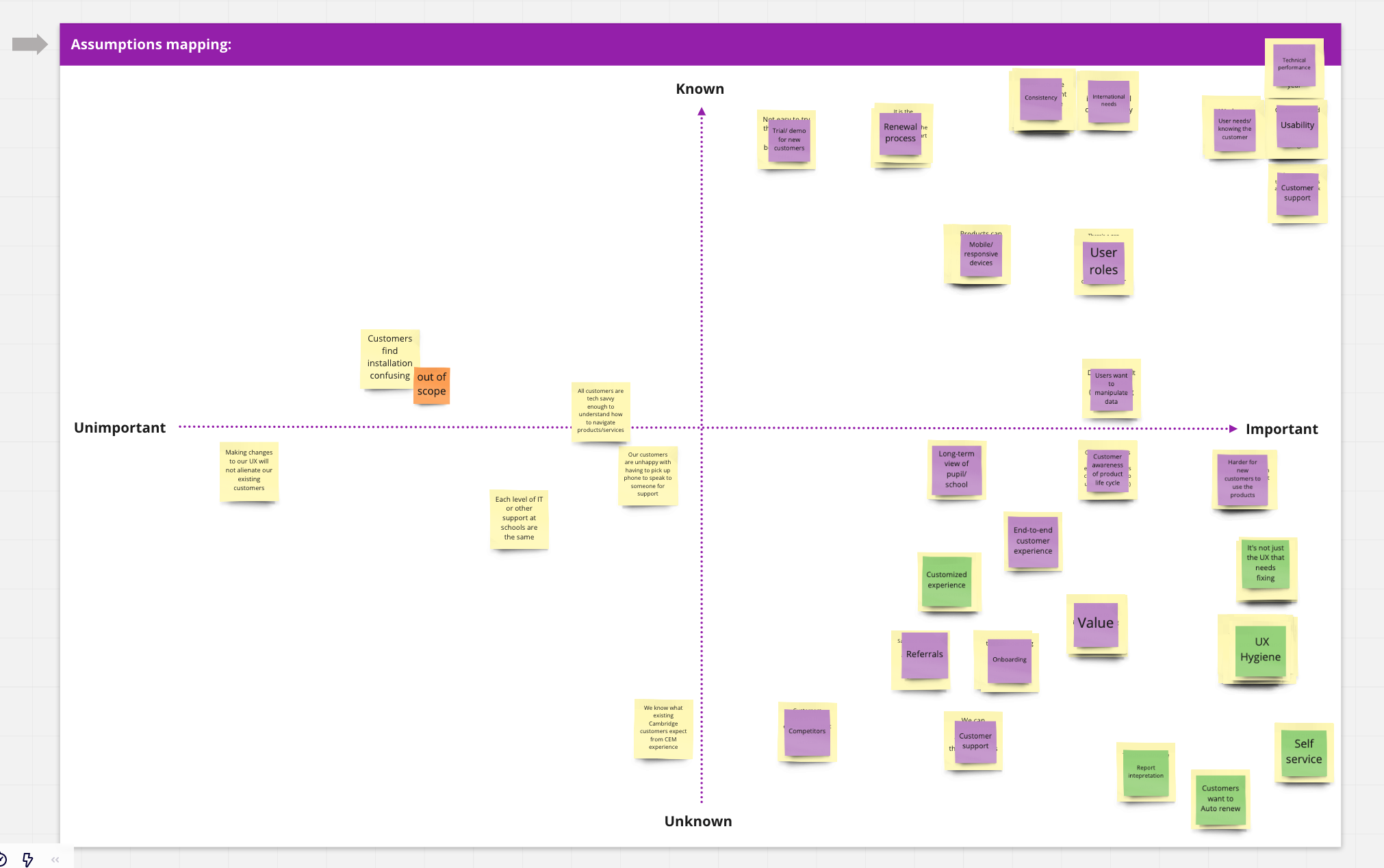
Assumptions mapping exercise
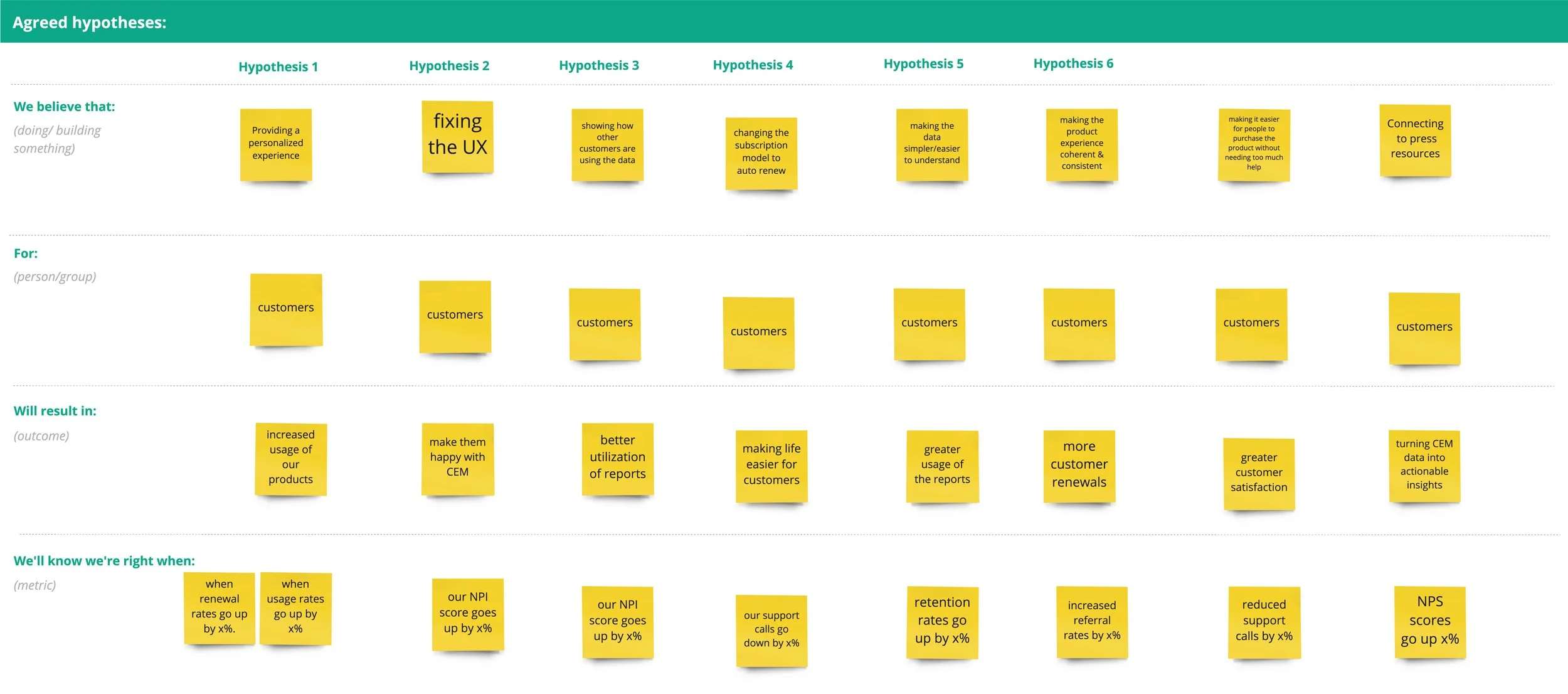
Research hypothesis created with stakeholders
Research
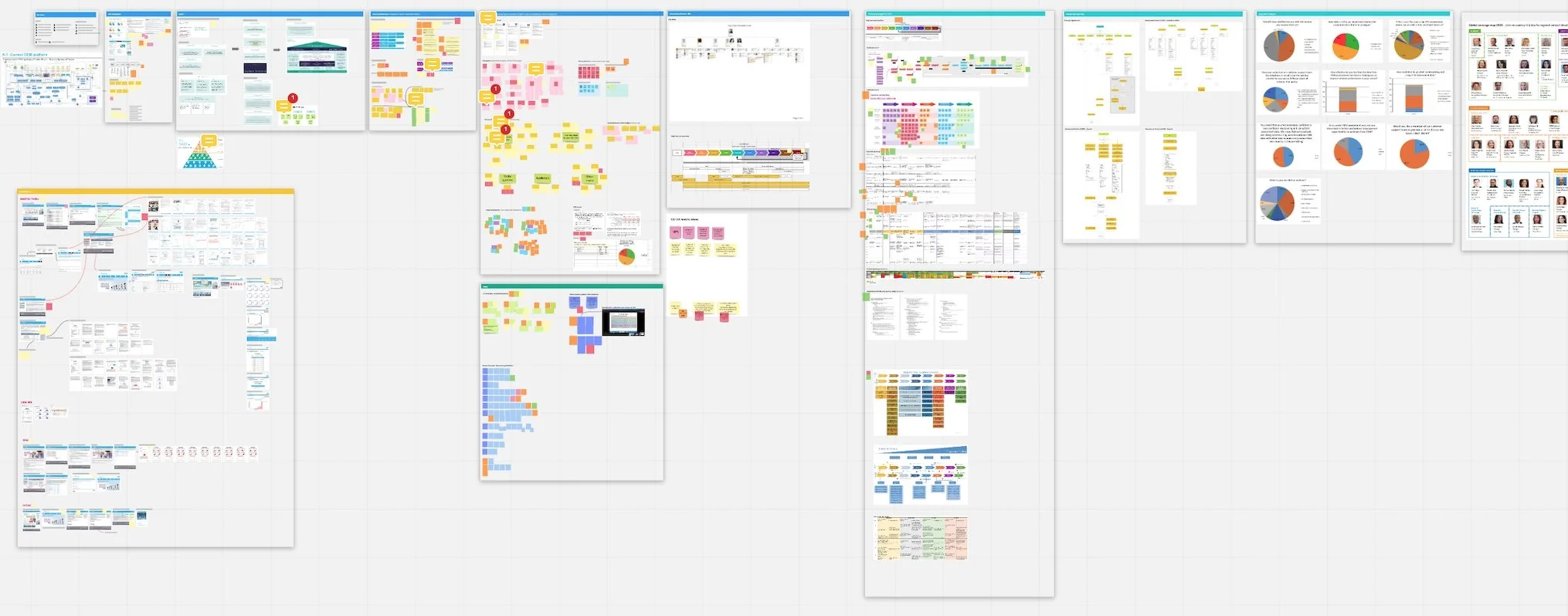
Filled a whole Miroboard with background research, in preparation for the Service design sprints
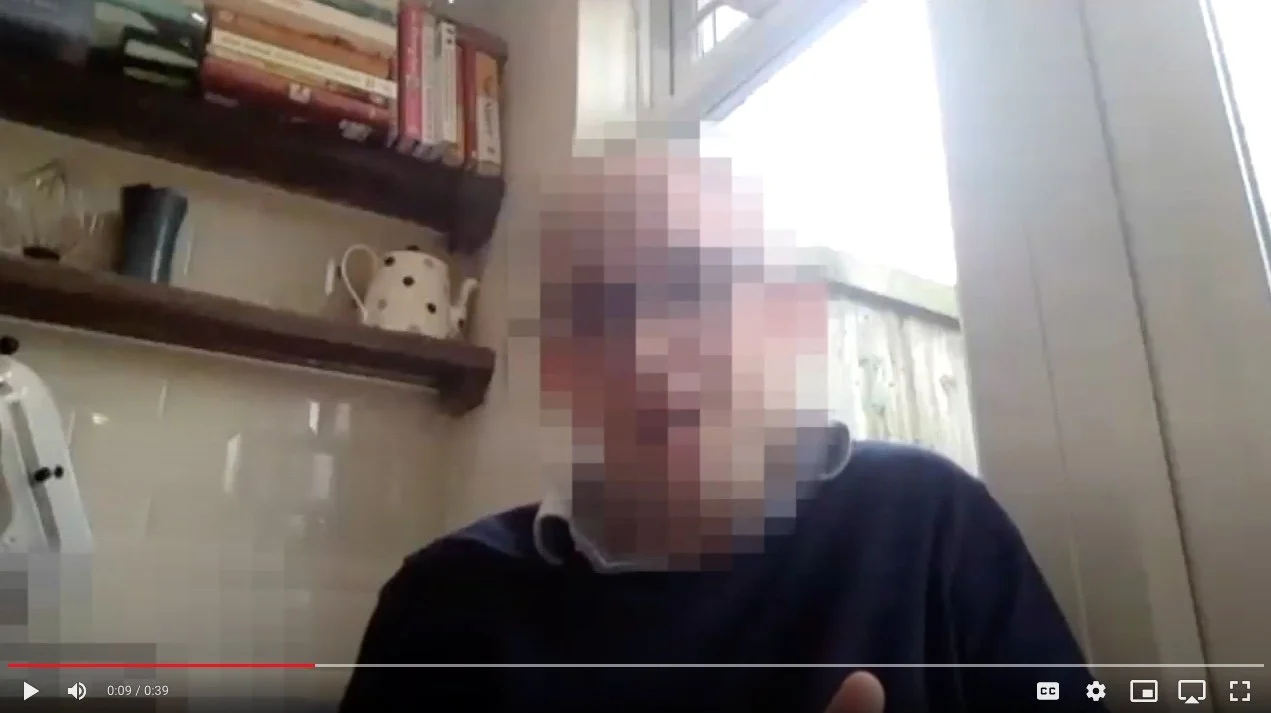
Video images from remote interviews
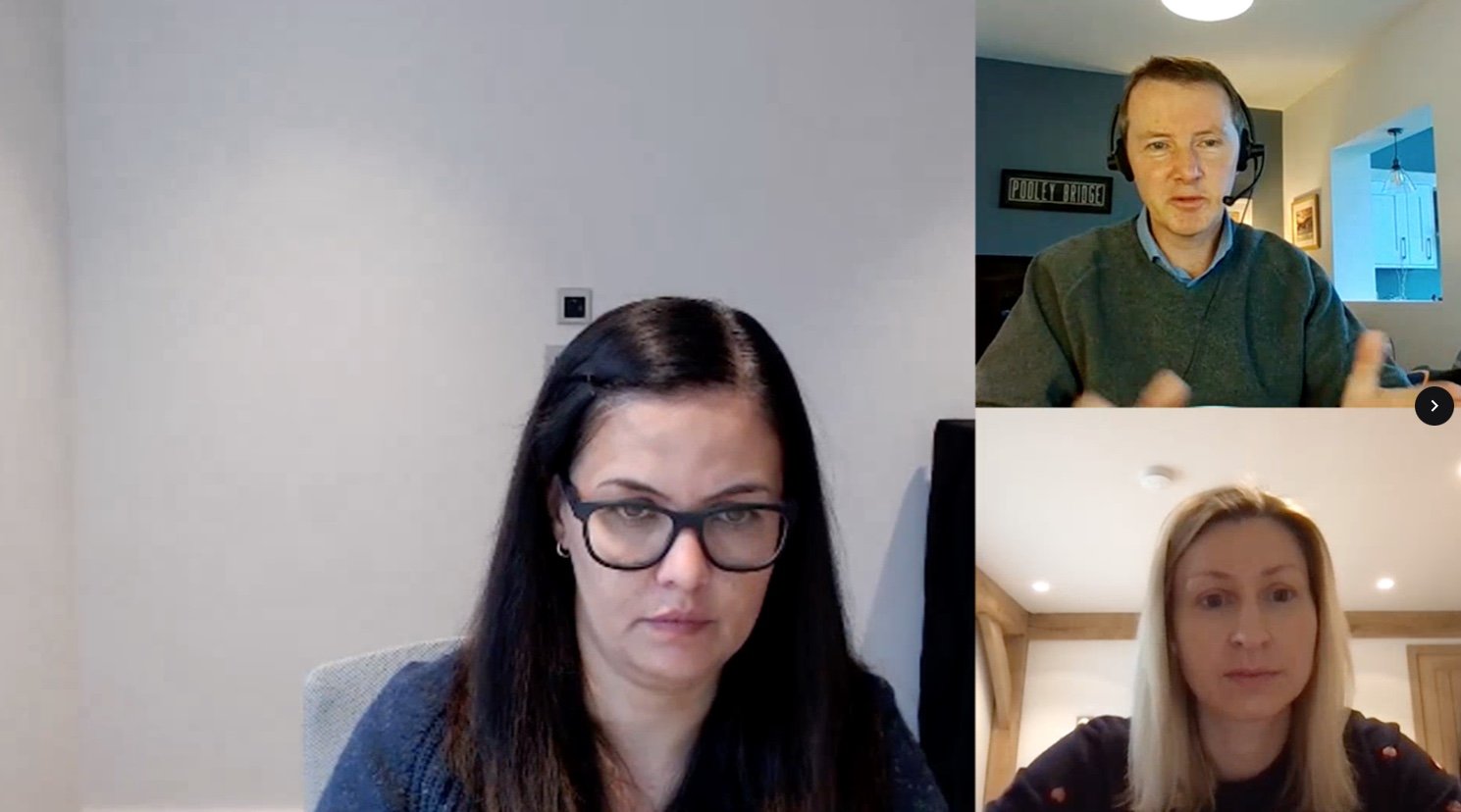
analysis
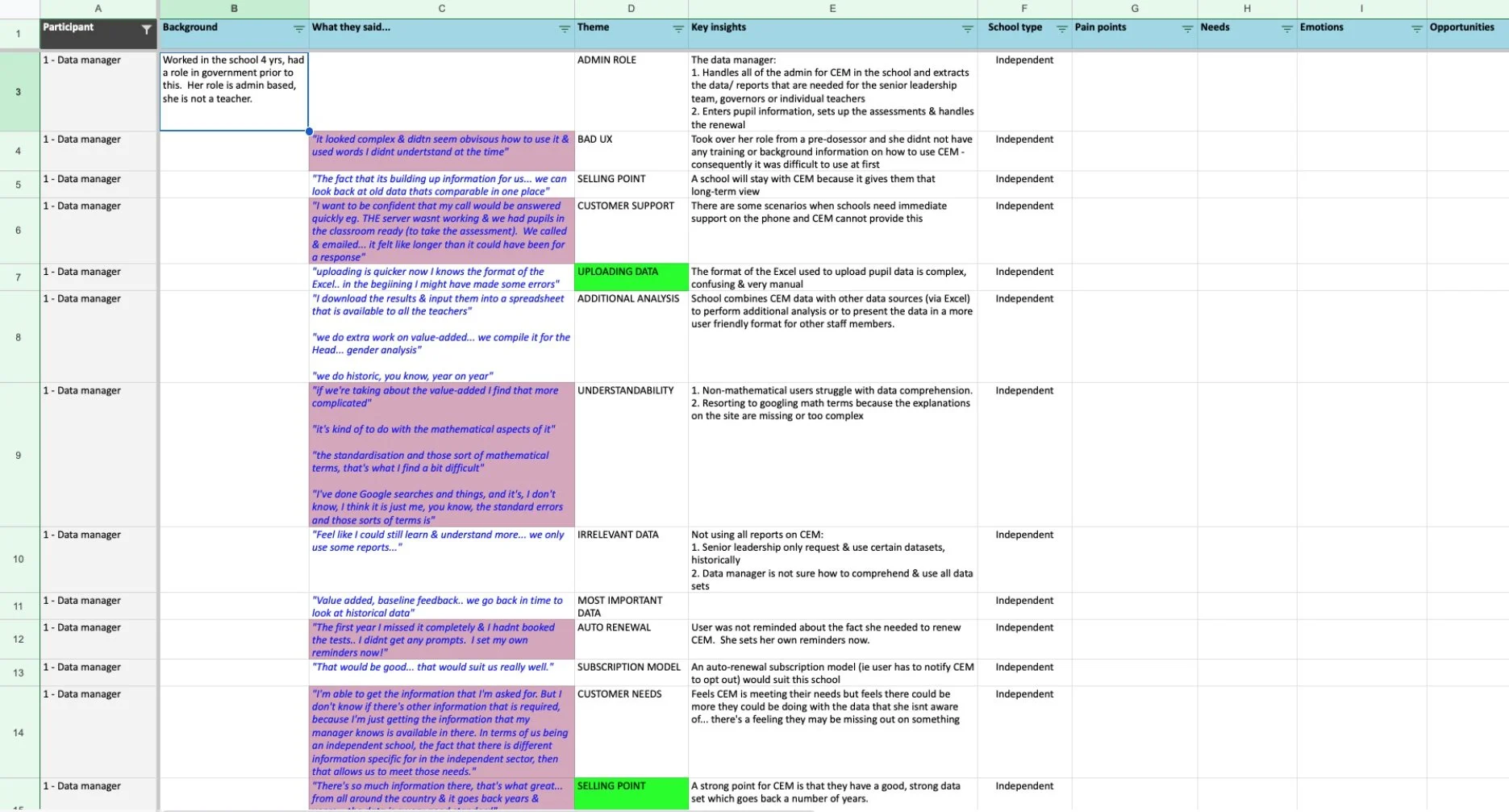
Raw, coded and indexed research insights
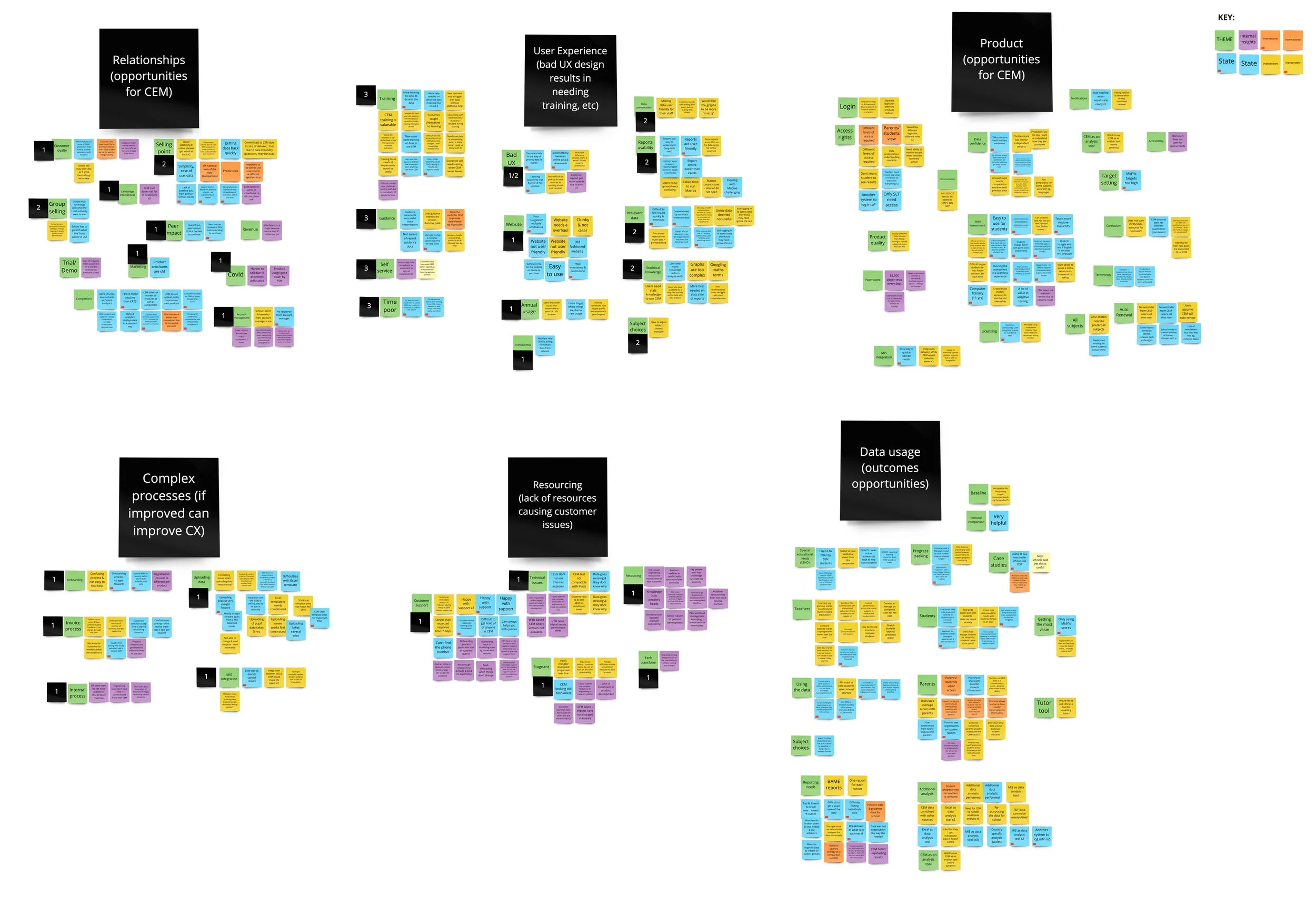
Research findings were grouped and themed in Miro
Persona
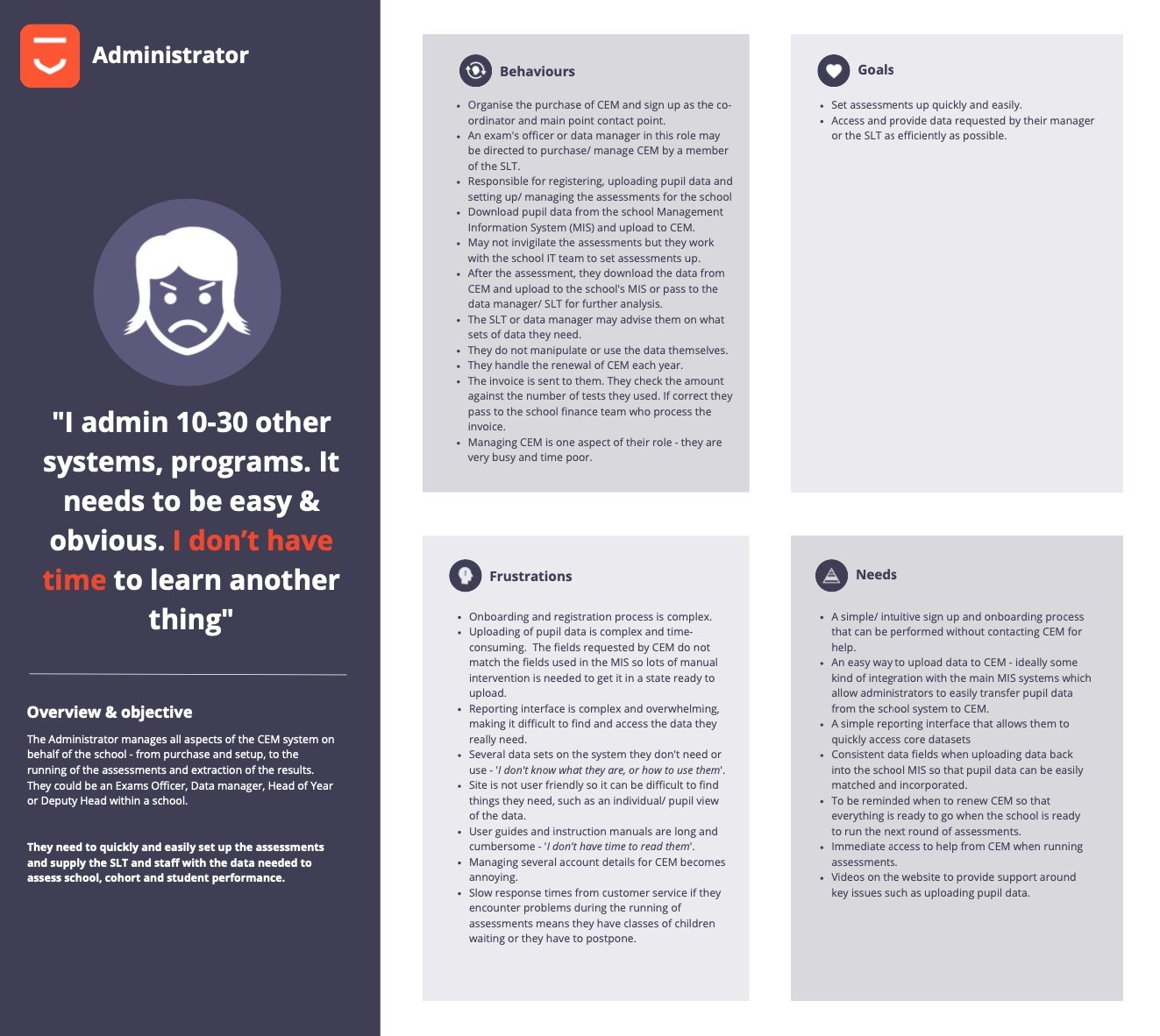
Functional Persona example
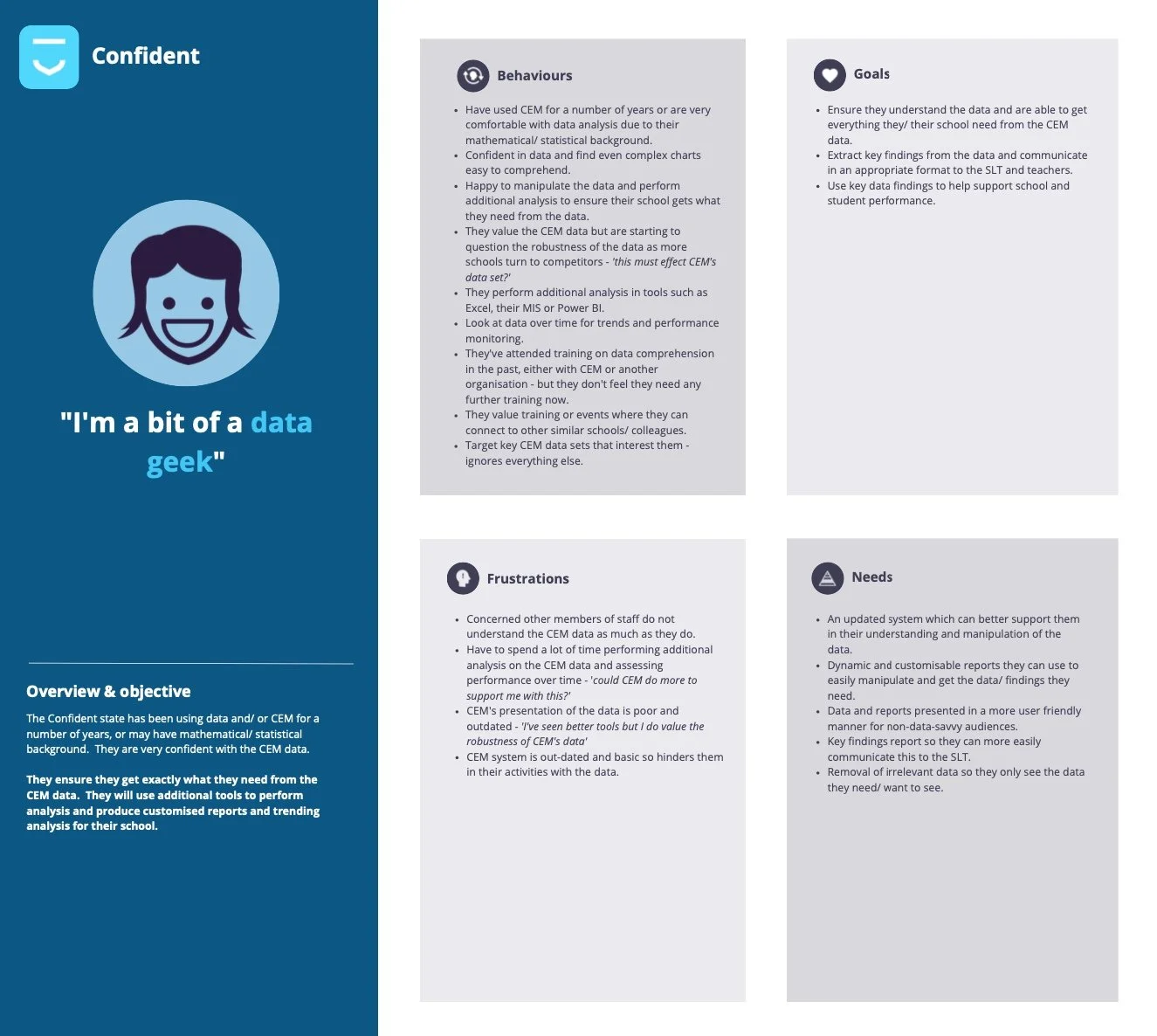
Behavioural Persona example
Service blueprints
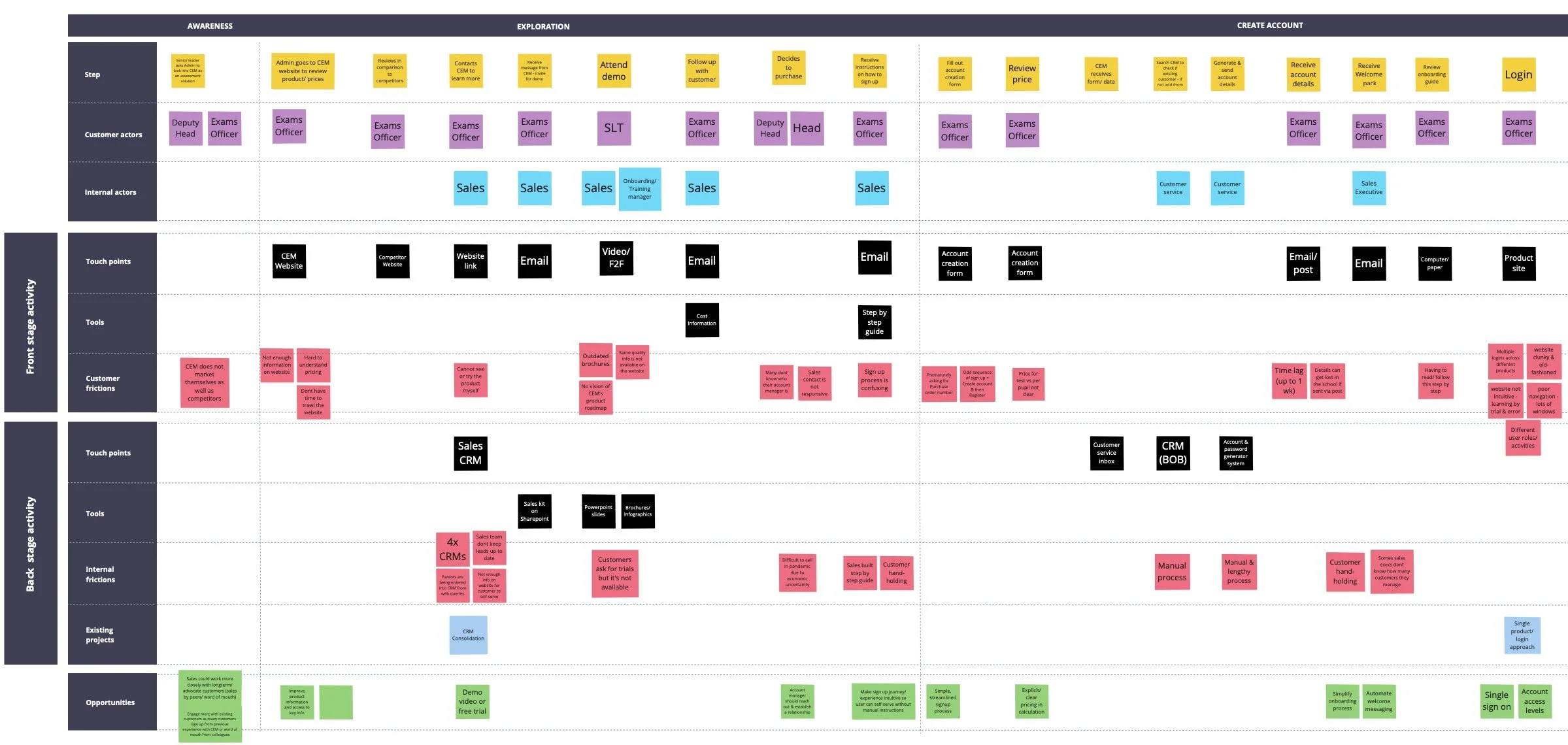
Current-state blueprint created in Miro
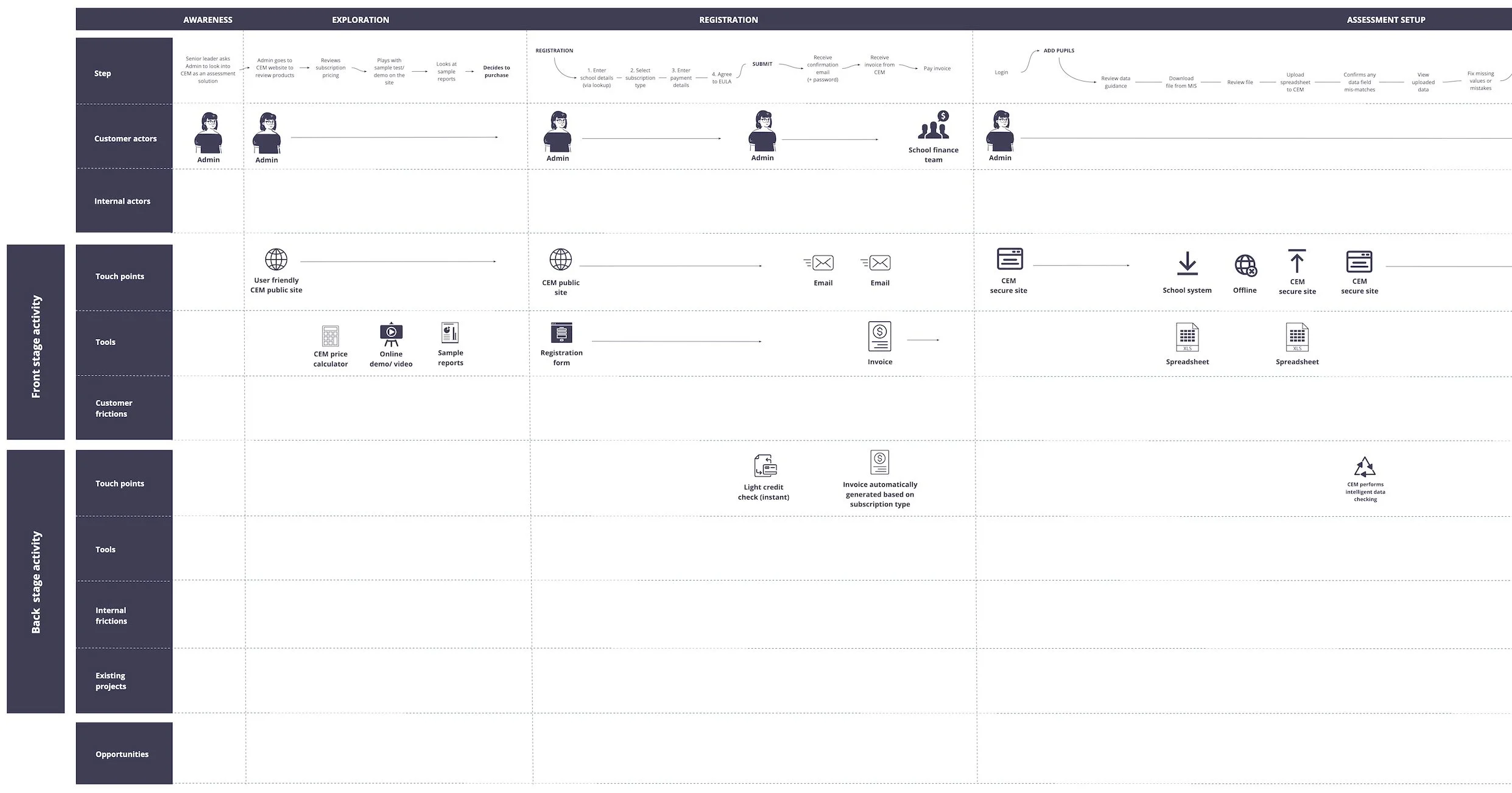
Future-state blueprint based on user tested and prioritised opportunities
IDEATION & OPPORTUNITY PRIORITISATION
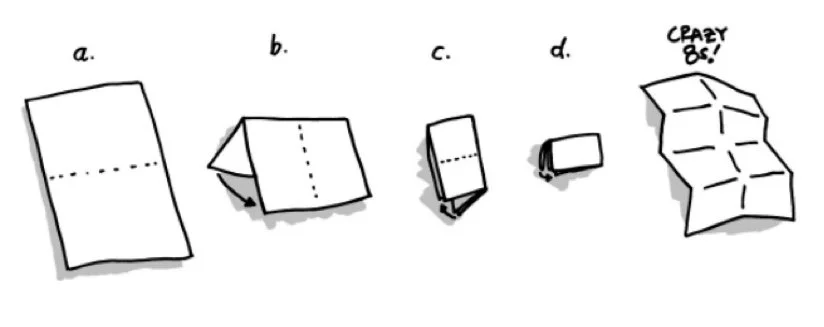
Ran an Ideation workshop with stakeholders to explore potential solutions to the identified challenges and opportunities
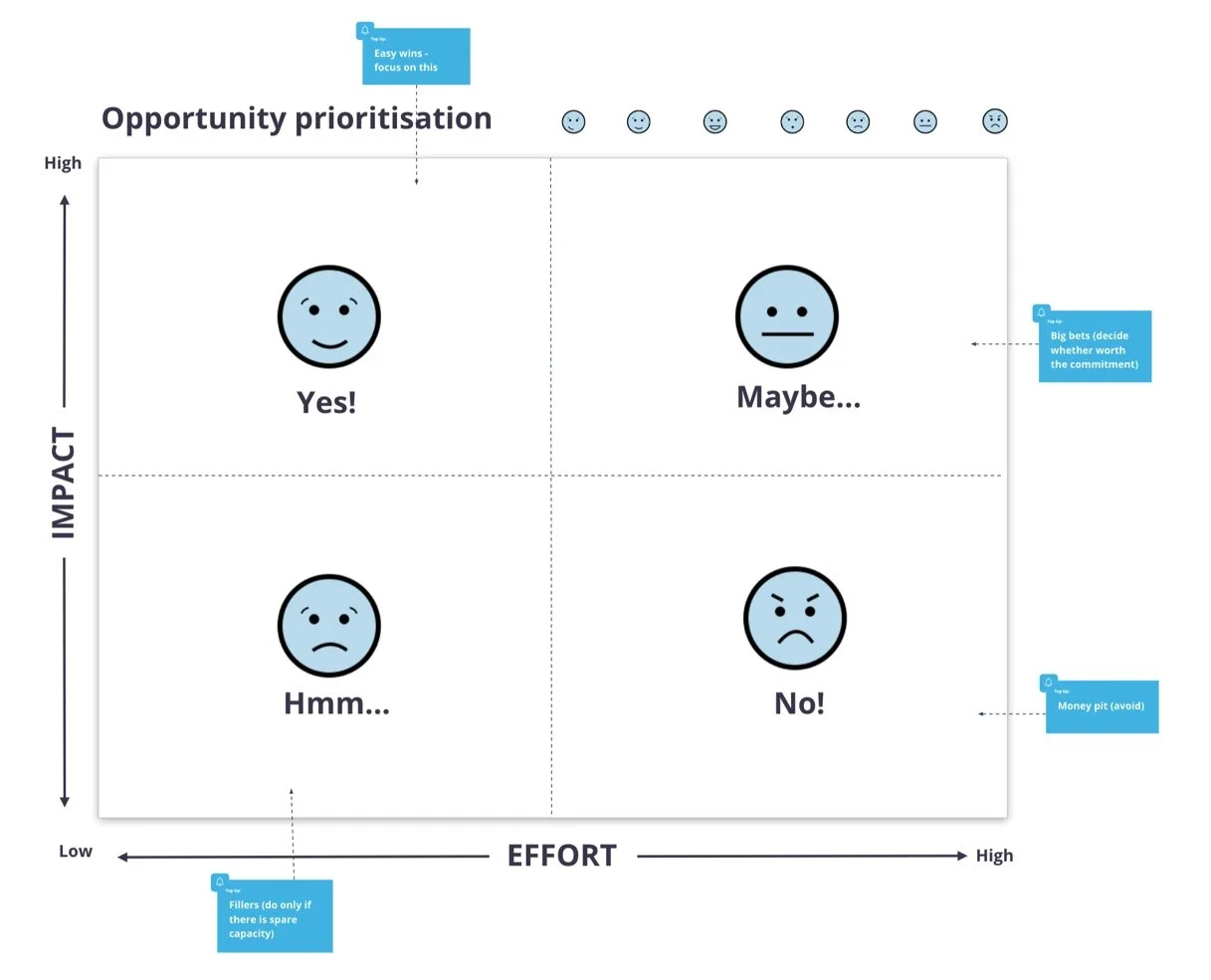
Prioritised the opportunities with the group to help us decide what to prototype and test with customers
prototype and user testing
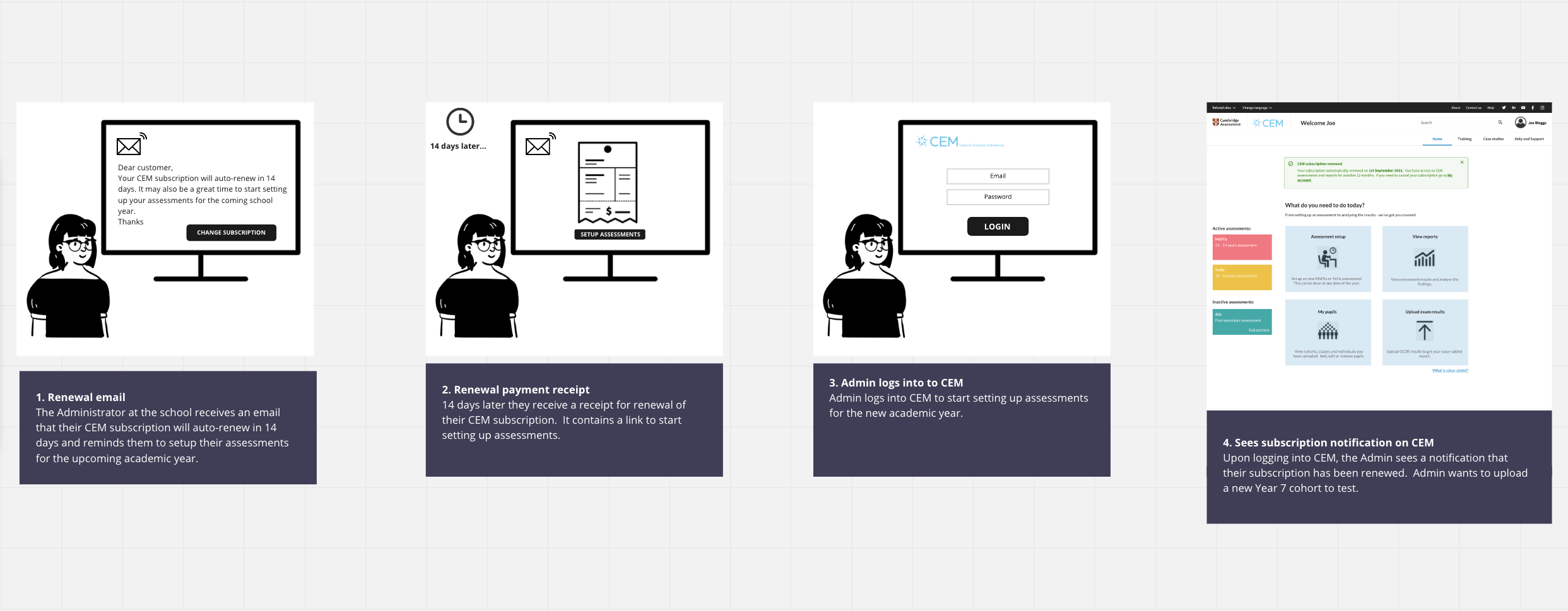
Created a storyboard with prototyped screens to test with customers
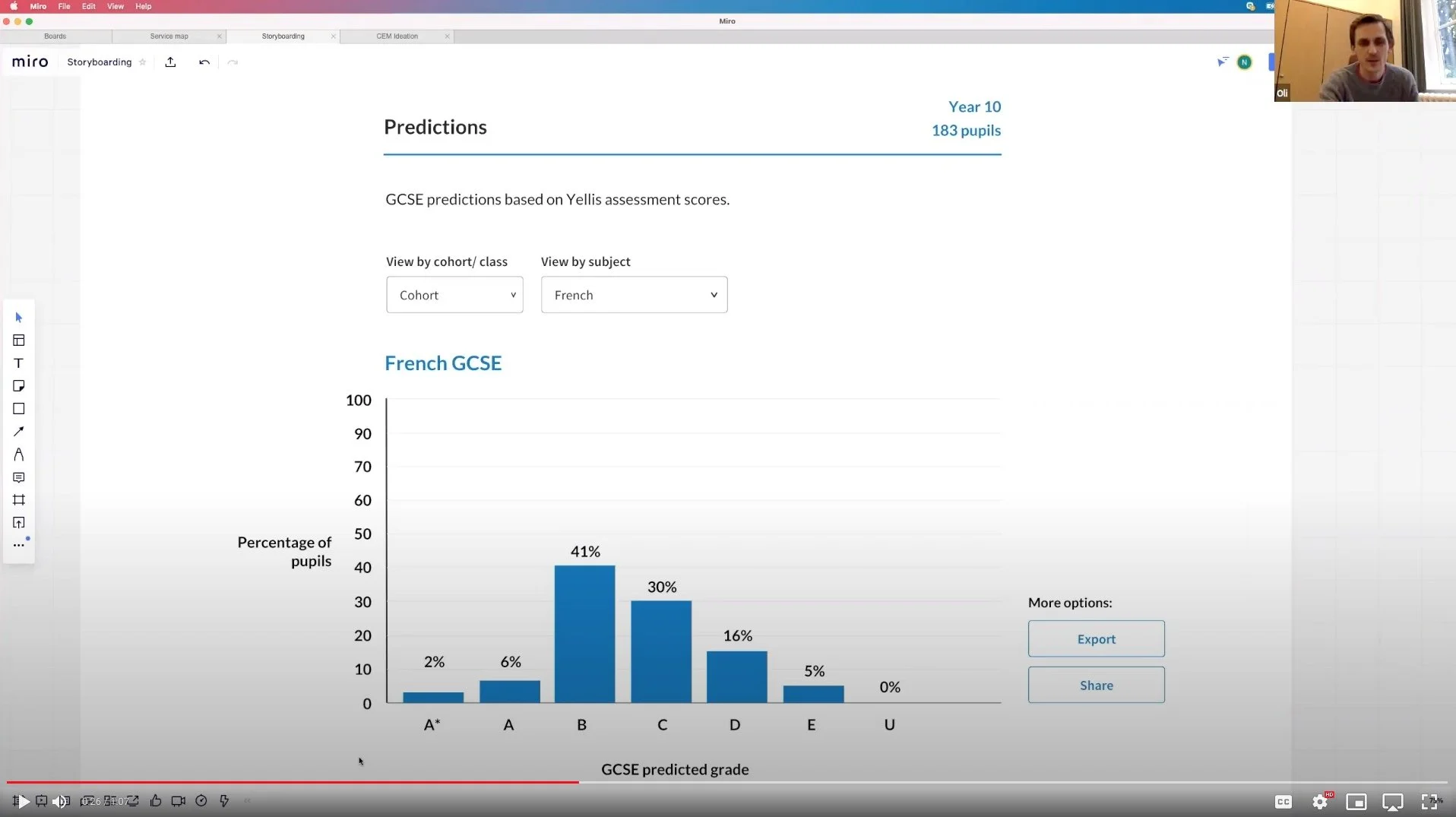
Image taken from remote prototype testing
Reports
Findings summarised into a simplified report, with video inserts of customer interviews:
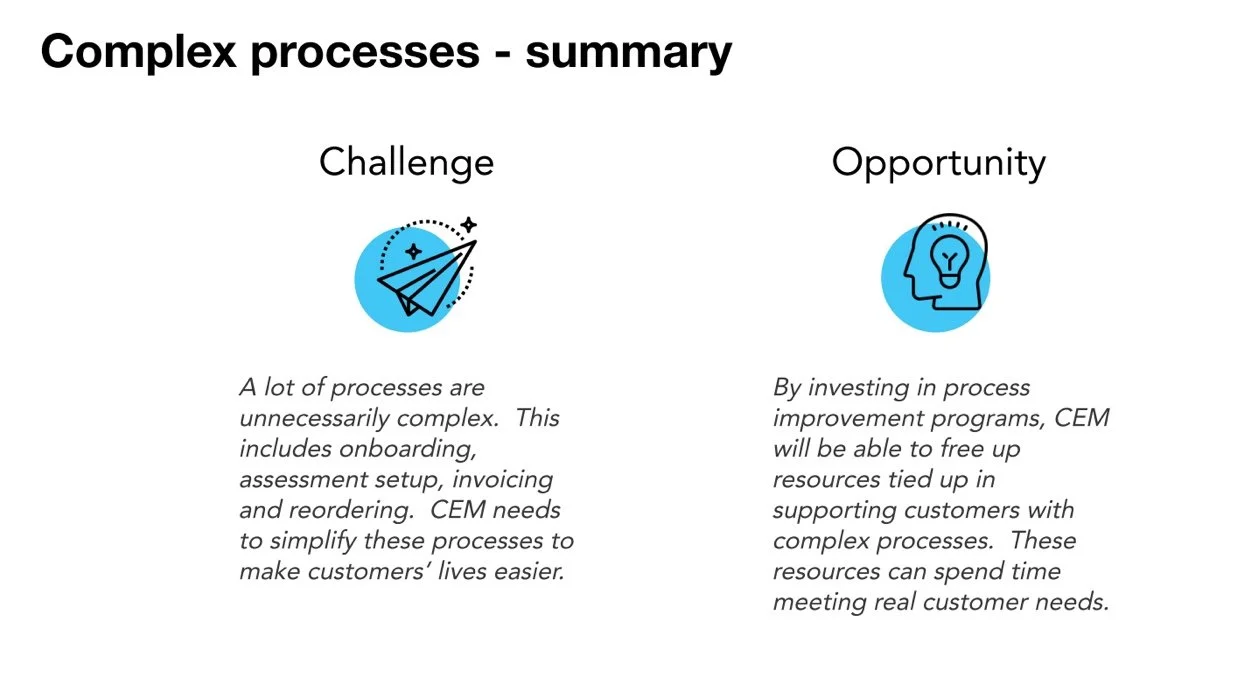
Example ‘Theme summary’ slide taken from a project report
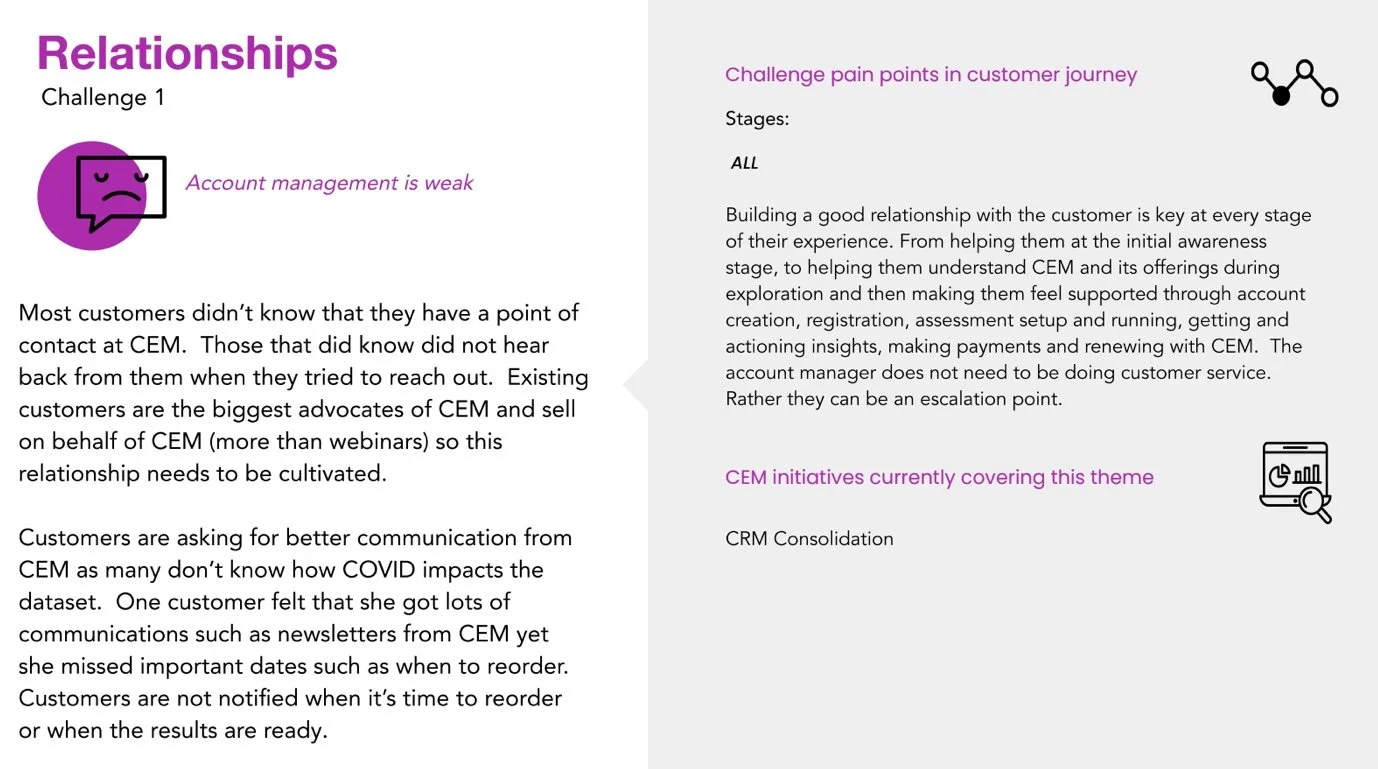
Example ‘Challenge summary’ slide taken from a project report
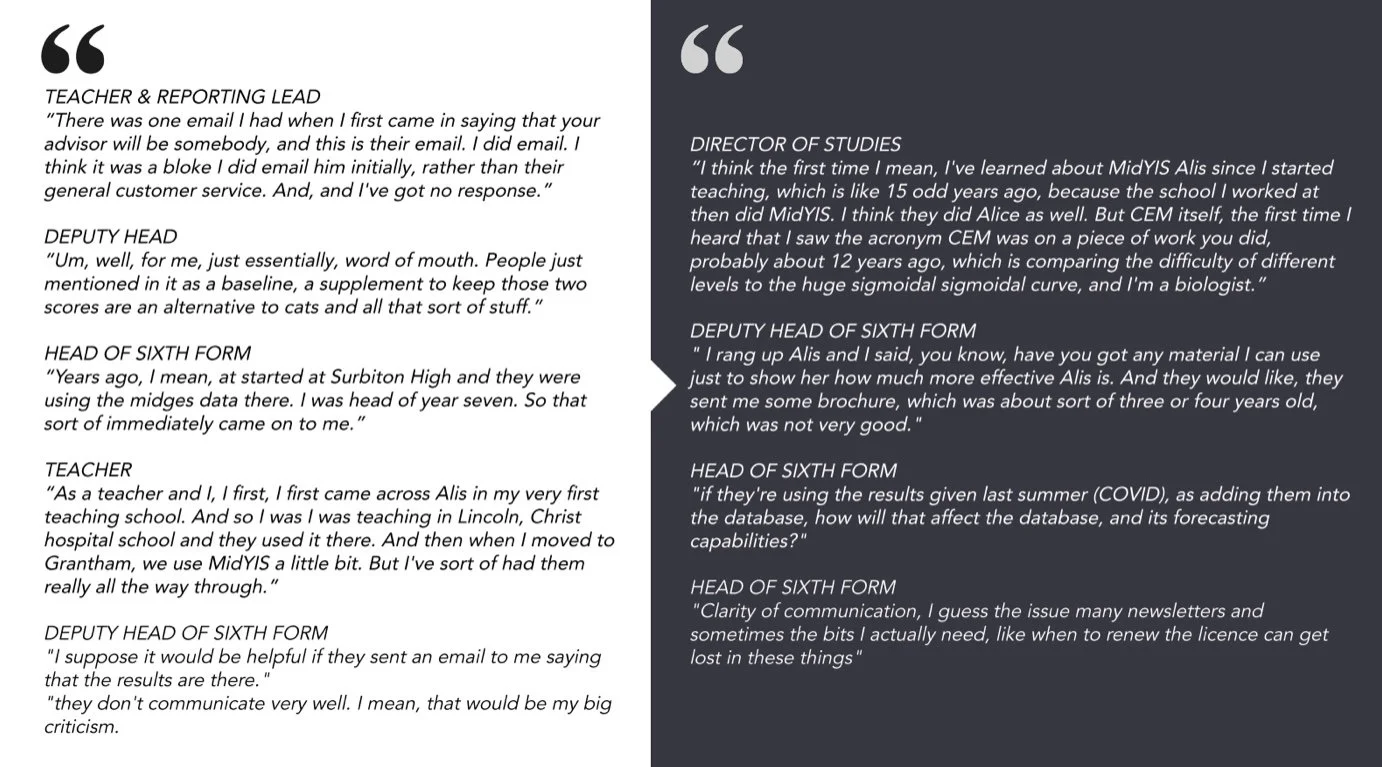
Included real words from the customer at every opportunity
< Back to Service design